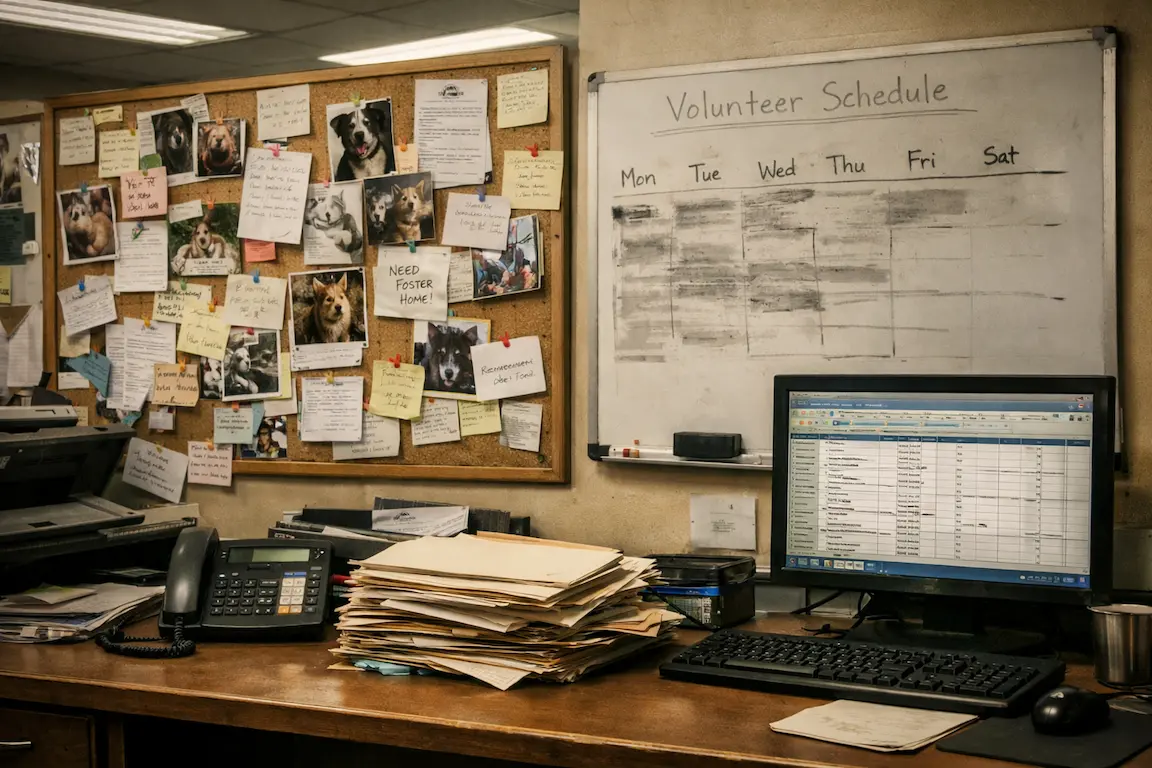
A foster-based rescue has no front desk, no kennel to walk through, and no whiteboard everyone passes in the morning. Your animals live in dozens of homes, and most of your team works evenings and weekends from their phones. Rescue management software gives those people one shared place to check what's going on.
Many shelter software products were designed around a building, so test how well they fit a rescue that doesn't have one. This guide covers what foster-based organizations should look for.
Your foster network is your capacity
In a facility, you can count empty kennels. In a foster-based rescue, your open space is spread across people's homes, and it changes all the time. Before you say yes to a new animal, you need to know who has room and who is a good fit.
Look for software that lets you:
- Set how many animals each foster can take
- See who has open space right now
- Filter by experience or preference, such as bottle babies, large dogs, or medical cases
- Track foster status, including people in training or taking a break
PawPlacer's foster list can be sorted by most space free and filtered by status and tags, so you can tag people by experience and find them quickly. Each profile shows capacity, such as "2 of 3 spots filled." If a foster is already full, PawPlacer won't let you confirm another placement. If you leave capacity blank, it's treated as unlimited, so fill it in for each foster.
Placing an animal in a home
A foster placement needs more than a name on a spreadsheet. You'll want a start date, an expected end date if there is one, notes on what the foster agreed to, and a signed agreement.
In PawPlacer, assigning a pet creates a pending placement that you confirm when the animal actually moves. To place a whole litter together, use Assign litter to foster, which checks that there's room for all of them. Foster agreements can be signed through your application form or sent separately, and home visit records can be stored on the foster's profile.
When an animal moves between homes
Fosters go on vacation, get sick, or discover that the new dog doesn't get along with their cat. These moves are when information most often gets lost, because it may only exist in the previous foster's text messages.
Keep the animal's information on the animal's record. Then a move only changes who's responsible. In PawPlacer, a transfer requires a date and a reason, closes the old placement, and starts a new one. When a foster returns an animal to the rescue, use End foster so the placement stays in the history. Avoid deleting placements unless one was entered by mistake.
Keeping up with care across many homes
Without a central place to check, care reminders tend to depend on one coordinator's memory. If that person is away, a booster or a refill can easily be missed.
The coordinator needs to see every animal's due care in one list, regardless of which home the animal is in. The foster needs to know what's due for their animals, and in plain language. PawPlacer's Upcoming Medical dashboard widget shows what's overdue across the organization, and each foster's profile has a Care this week panel listing overdue care and anything due in the next seven days for pets in that home. You can assign medical items to a team member, so a follow-up has someone responsible for it.
Expect to set up a simple routine for updates from fosters. Weekly photos and a few sentences are often enough. Tell fosters exactly what you need to know right away, such as vomiting, not eating, or a bite, and who to contact when it happens.
Coordinating transport
Foster-based rescues do a lot of driving, including vet runs, adoption events, and transfers from partner shelters. Long-distance transport needs extra planning. Assign the driver and the handoff points before anyone leaves, and make sure the people on each end know who's coming and when.
PawPlacer's Transports area tracks route, driver, pets, estimated and actual times, mileage, and costs, including each pet's share of the trip. Driver profiles list service areas and availability notes.
Deciding who sees what
Not everyone on your team needs access to adopter applications, donor records, or a foster's home address. Limit each record type to the people whose job requires it.
PawPlacer's team roles separate work such as pet records, adoption and foster counseling, and administration. When someone leaves the team, removing them revokes their access and takes them off open tasks and surrender cases so the work can be reassigned.
There's also a privacy benefit for your fosters. When someone uploads a video to a pet's profile, PawPlacer removes the recording location that phones store in the file, so a public clip doesn't reveal where the foster lives.
Showing animals to adopters
Adopters can't browse kennels at a foster-based rescue, so your online listings do most of that work. Fosters can help here, since they usually have the best photos and know the animal's personality. Your software should make it easy to keep listings up to date from one record.
PawPlacer offers public pet profiles, website widgets, and listing sync for Petfinder and Adopt-a-Pet. Adoptable pets are also shared with GetBuddy, based on your visibility settings.
When an adopter is ready, your software should support a remote adoption, since there may be no office to visit. A PawPlacer checkout can run on the adopter's phone, including the contract, an optional donation, and payment. See our guide to animal adoption software for the full process.
Frequently asked questions
We're only a few people. Do we need this yet?
If one or two people manage a small number of animals, a well-kept spreadsheet can work. Consider moving when several people are updating the same information, or when you've missed a medical date or lost track of paperwork.
What does it cost?
Rescue software pricing varies, and it's often based on animal counts, users, or adoption fees. PawPlacer is free for every animal welfare organization, with no paid tier.