Most rescues run on tight budgets, so free software is an obvious place to start looking. But "free" can mean several different things. Some products are free for a limited time, some are free until you reach a certain size, and others make their money in ways you may not notice at first.
We should say up front that PawPlacer is free rescue software, so we have an interest in this topic. We've tried to make this guide useful however you end up choosing, and the questions below are ones you should ask us as well.
What does "free" really mean?
Here are the most common arrangements you'll come across.
Free trials. You get full access for a set time, often a few weeks, and then you have to start paying. These are useful for testing, but they aren't free software.
Free tiers. A limited version is free, and you pay to get more. The limit might be the number of animals, the number of users, or access to certain features. Check whether your organization would stay under those limits, including during your busiest months.
Transaction-funded products. There's no subscription, but the company earns money from your adoptions or donations through a fee or percentage. This can be a fair arrangement, particularly for small groups, but do the math. A fee on every adoption may add up to more than a subscription would.
Bundled offers. The software is free if you also buy something else, such as a website or payment processing.
Open-source software. The code is free to use, but someone has to host, maintain, and secure it. This can work well if you have a dedicated technical volunteer. Plan for what happens if that person leaves.
Fully free products. The whole product is free, with no paid plan. In this case, it's reasonable to ask how the company pays for itself, and whether that's likely to continue.
What should free software include?
The price doesn't change what your rescue needs to do its work. Before you get too far with a free product, confirm that it covers the basics:
- Animal profiles with photos, status, and history
- Medical records with due dates and reminders
- Foster records and placements
- Adoption applications and contracts
- A way to publish available animals on your site or on adoption listing sites
- Team access with different permission levels
- A way to export your data
If any of these require an upgrade, count that upgrade as part of the price.
Costs that free software doesn't cover
Even when the software is free, you may still have some costs:
- Payment processing. Card processors like Stripe and Square charge their own fees on each transaction. No software can waive these, but some vendors add their own fee on top, so ask about that.
- Time. Setting up forms, importing records, and training your team takes hours. A free product that's hard to use can cost more volunteer time than it saves.
- Your website. Most software offers widgets or links that work with your site, but you'll typically host the site yourself.
- Migration. Moving your data in might be free or might be a paid service, even when the software itself is free.
Free software versus spreadsheets
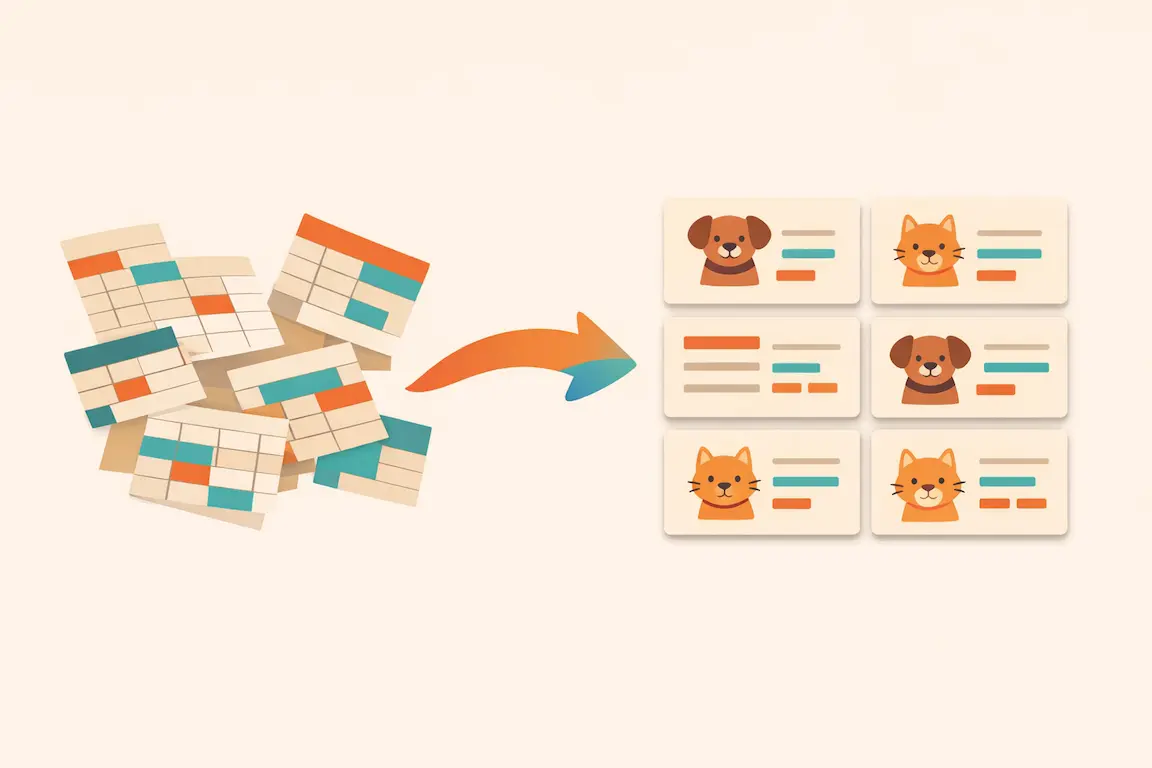
Spreadsheets are free too, and they work well for a small team. A spreadsheet gets harder to manage as more people edit it, more animals come through, and medical dates start to matter. It can't remind anyone about a booster, it won't stop two people from overwriting each other's work, and it usually gives everyone access to everything.
If you've reached that point, a free dedicated system can solve those problems without adding to your budget. Our post on outgrowing spreadsheets describes the common signs.
Questions to ask about long-term fit
Moving your records is a lot of work, and you won't want to do it twice. Before you commit to a free platform, ask:
- How is the company funded? Look for a clear answer. Grants, investors, paid tiers, and fees all come with different incentives.
- What happens to our data? Check whether your adopter and donor information can be sold or used for advertising.
- Are there ads? Some products show ads or offers to your staff or to your adopters, such as during checkout.
- What are the limits? Ask about animals, users, storage, forms, and email volume.
- Can the terms change? Find out whether free users have had features moved to paid plans in the past.
- Can we leave? Export your data during your test and open the files.
- Who answers support questions? Find out if free users receive the same help as paying ones.
A practical way to test a free platform
Before you import anything, spend an hour with a single animal. Create the record, add medical history, assign a foster, process a test application, and complete an adoption. Then return the adoption and check that the history makes sense.
Ask a teammate to try it on a phone, without help. If they can get through their usual task, you're in good shape. Then export the data and make sure you could take it elsewhere. Our buyer's checklist has a more complete version of this test.
How PawPlacer answers these questions
Here's how PawPlacer answers each of the questions above:
- Price: free for every animal welfare organization, with one plan that includes everything. There's no trial, no credit card, no feature tier, and no per-adoption or per-user fee.
- Funding: PawPlacer is self-funded by its founder, and it doesn't depend on venture capital or grants.
- Data: your data stays yours. PawPlacer doesn't sell it or use it for ads, and it doesn't show ads in the product. Public pet listings are shared with GetBuddy based on your visibility settings.
- Limits: there are no usage or organization-size limits.
- Payment fees: Stripe, Square, and other processors charge their standard fees. PawPlacer adds nothing on top and takes no cut of adoption fees or donations.
- Leaving: there's no contract, and CSV exports are available whenever you want them.
- Migration: the PawPlacer team moves your records at no charge, or you can do it yourself with the Data Uploader.
You can try the public demo without signing up.
Frequently asked questions
Is there completely free software for animal rescues?
Yes, although you should check what "free" covers. Some products are free up to a limit, while others are free in exchange for fees on transactions. Ask to see the complete list of what's included.
Why would a company offer rescue software for free?
Reasons vary. Some earn money through payment fees, bundled services, or paid upgrades, and others are funded by grants or by their founders. Ask each company directly, since the answer affects how long the product is likely to stay free.
Can a free platform handle a larger rescue?
Some can, and others set limits on animals or users. Test the areas where large organizations tend to need more, such as team permissions, reporting, and imports, and confirm any limits in writing.