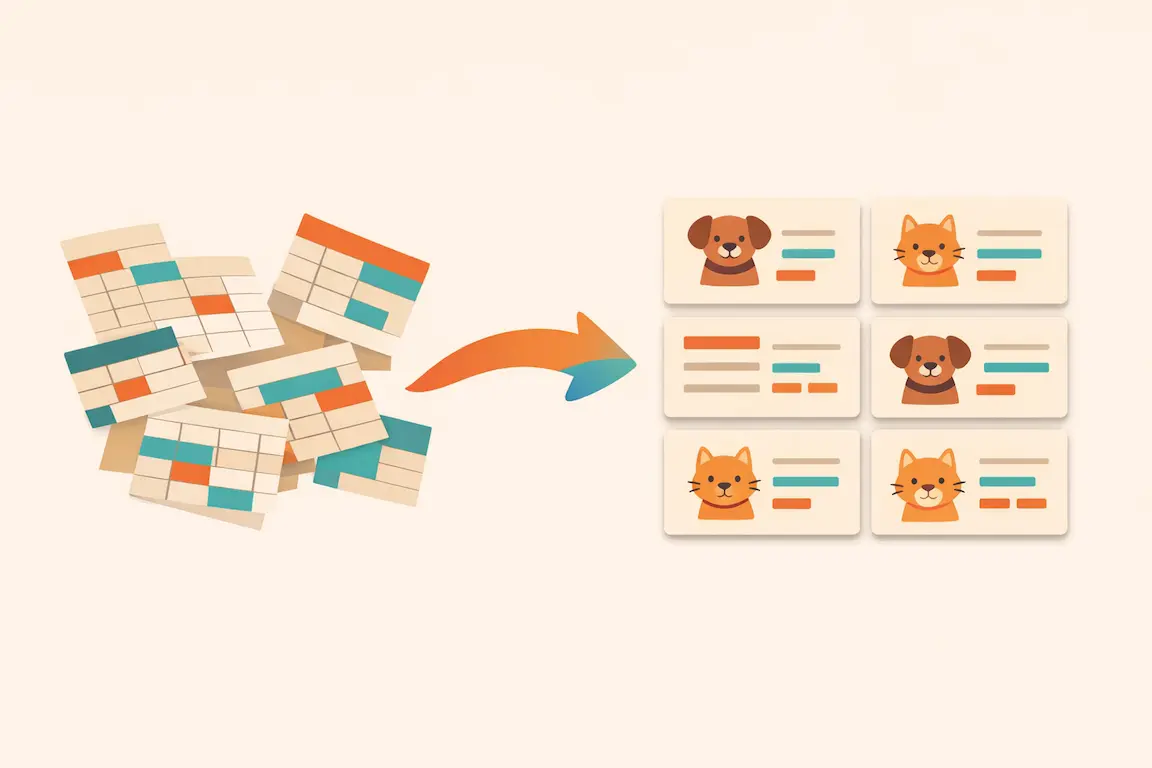
You know that spreadsheet with 347 rows of pet records, six tabs of adopter info, and a column labeled "notes" that contains everything from medical histories to "this one bites, not hard but he means it"? That spreadsheet is the reason you haven't switched software yet.
The new tool is almost certainly better. The problem is the thought of re-entering all of it by hand — every vaccine date, every foster placement, every adopter who took home a bonded pair in 2023 — which is enough to make anyone say "we'll deal with it next quarter" for the third year in a row.
Data migration is the worst part of switching anything. The good news is it doesn't have to be the nightmare it's usually made out to be.
It's the relationships that get you
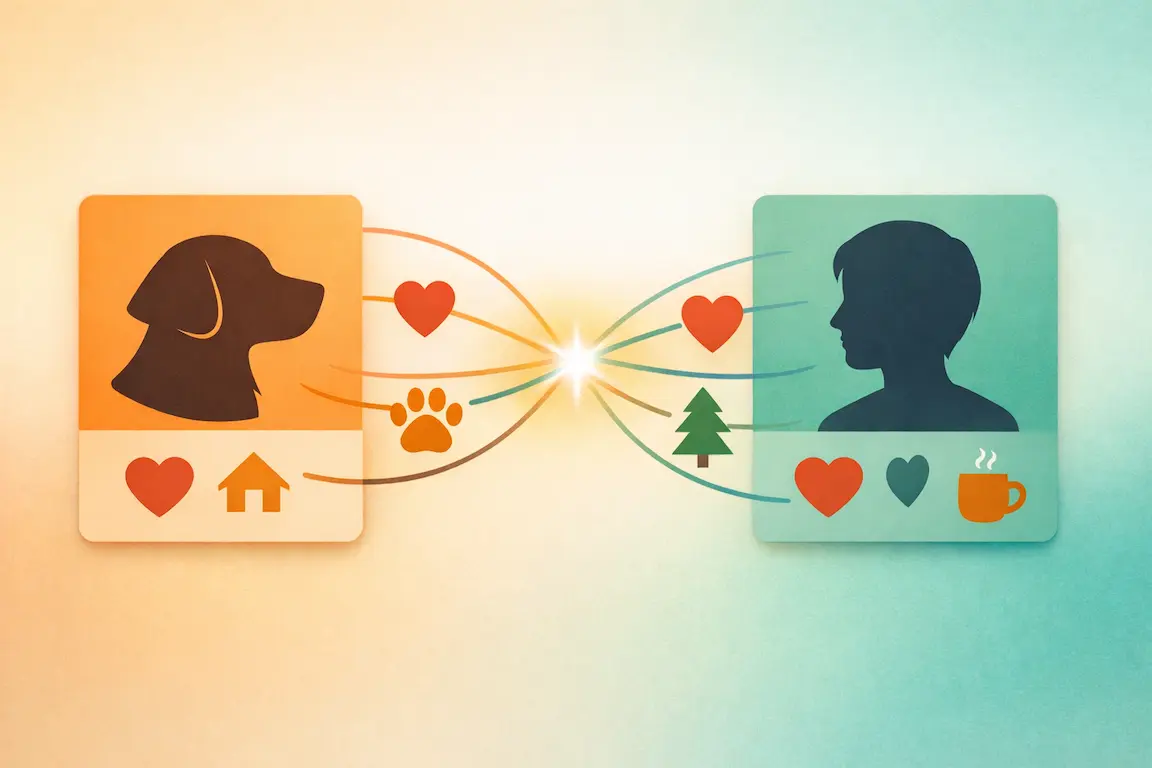
The pet records themselves are straightforward. Names, breeds, ages, statuses; that's just a CSV. The hard part is the connections. Thelma the adopter who took home two cats from different litters. A foster who's had six placements over two years. Biscuit's profile that links to his dental records, his adoption contract, and the family who adopted him in March.
Any migration tool worth using should handle those connections, not just flat records. If you import your pets and then separately import your adopters, the system should be able to link them together so your historical data stays intact. If it can't do that, you're going to spend the next month manually reconnecting records, which is somehow worse than re-entering them from scratch.
Your data is weird and that's fine
Your old system calls it "Animal Name" and the new one calls it "name." Your CSV has "DOB" and the new system expects "birthday." Your species column says "K9" instead of "dog" because a volunteer in 2021 was apparently a cop show fan.
Real shelter data is messy. Dates might be "Jan 4, 2020" or "1/4/2020" or just "4 years" as an age estimate. Booleans might be "yes," "Y," "true," or "1." Species might say "dog," "canine," "K9," or, in one memorable spreadsheet I saw, "pupper." Empty cells, "N/A," "unknown," and the occasional "???" are all normal.
Good migration tools figure most of this out automatically. They look at your column headers, guess the mappings, and let you adjust anything they got wrong. The point is you shouldn't need to spend an evening reformatting your data before importing it; the tool should meet your data where it is, abbreviations and all.
Always preview before you commit
Any tool that imports data without showing you what it's about to do is a red flag. You want to see a preview: parsed dates, normalized statuses, cleaned text, before anything touches your new database. And if some rows have problems (missing required fields, a date that makes no sense), those should be flagged separately so you can fix them without holding up the rest.
The best importers aren't all-or-nothing. Valid rows go through, problem rows get flagged, and you deal with the exceptions without re-uploading everything. The worst importers fail silently and you find out three weeks later that 40 animals are missing their intake dates.
Photos are the secret morale killer
If your pet records include image URLs from your old website or another stable public location, a good importer will attach those images to the right profiles. PawPlacer tries to fetch each imported image, convert it to WebP, and store it with your organization's media. If both hosting attempts fail, it keeps the original URL instead. Keep the source hosting available until you have checked the imported profiles.
Identity rules matter just as much. PawPlacer updates a pet when its stable custom_id matches, and it updates a
person record when exactly one existing record of that type has the same email. Repeated people rows in the same file
are combined by email. Ambiguous matches and duplicate custom IDs are surfaced instead of guessed. You do not want two
Biscuits in your system. One is enough.
Questions to ask before you commit
When you're evaluating a new platform, don't just ask "can I import data?" Ask the specific questions: Can you upload a CSV or Excel file directly? Does it handle relationship linking, pets to adopters, pets to fosters? Does it preview before importing? Does it handle the kind of messy, real-world data that rescues actually have? How long does a typical migration take: an afternoon or a month?
PawPlacer's data uploader handles pets, adopters, fosters, volunteers, donors, and surrenders; adopter and foster pet links; messy values; existing image URLs; and the identity rules above. It is included for every organization. Whatever platform you're considering, make sure the migration path is real before you sign up. "Easy import" that actually means "email us your file and we'll get to it in two weeks" isn't a migration tool. It's a support ticket.
The switch is worth it
Migrating is a one-time pain. Staying on software that doesn't work for you is an ongoing one. If the only thing keeping you on your current system is that spreadsheet with 347 rows and the column labeled "notes," take an afternoon, export your files, and try the import on PawPlacer. If it works, you've solved the problem and can focus on building complete pet records instead of wrestling with formatting. If it doesn't, you haven't lost anything, and you've learned something useful.