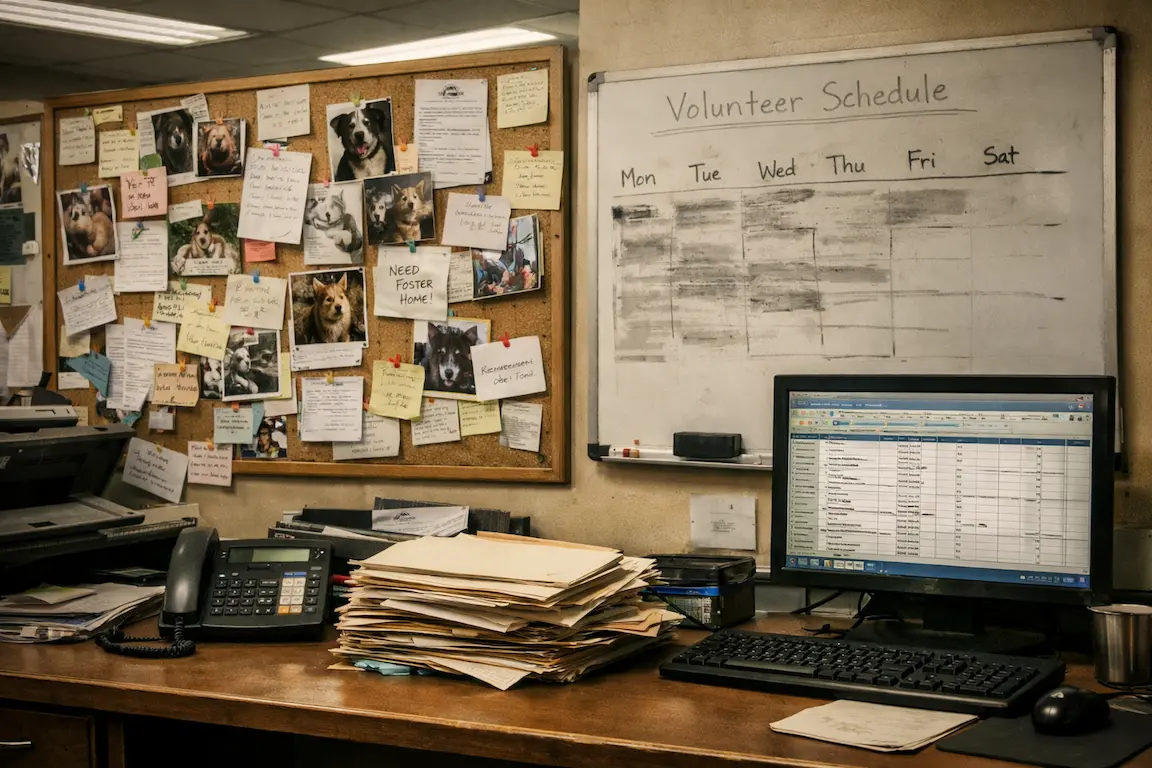
It's 11 PM on a Tuesday and the director of a small rescue is trying to figure out how many animals she has in care. Not because she doesn't care. Because the spreadsheet is on her old laptop, the vet records are in her co-founder's Gmail, and three of her animals moved fosters last week without anyone updating anything. She started a rescue to save animals. She's spending Tuesday night doing data archaeology on her own organization.
The emotional part of rescue is hard. Everyone knows that going in. What nobody warns you about is that roughly 80% of the job turns out to be logistics, phone calls, and trying to remember which foster has the pregnant cat. That stuff quietly wears people down. Here's what keeps coming up in conversations with rescues, and what actually seems to help.
Everything lives in someone's head
This is the most dangerous one. Intake process, vet contacts, which fosters will take kittens and which ones won't, where the donated food is stored, who has a key to the storage unit. All of it lives in one or two brains. When those people burn out (and eventually, someone will), the organization doesn't gracefully transition. It falls apart.
Write things down somewhere. It doesn't need to be a formal operations manual with a table of contents. A Google Doc titled "here's how we do intake" that's ugly but exists is already miles ahead of most rescues. Better yet, put the information into a system anyone on the team can open without asking permission. The rescues that survive losing a founder are the ones where the knowledge wasn't trapped inside her to begin with.
Medical records live in seven different places
"The vet faxed the records." "I think it's in the blue folder." "Check the shared drive, it's under 'medical' or maybe 'vet stuff 2024.'" Every one of those sentences is a confession.
A single pet with a full medical history scattered across paper files, email attachments, text threads, and Dropbox is a pet who's going to get a duplicate vaccine, miss a follow-up, or show up at their forever home without their heartworm records. Missed records become expensive, and occasionally dangerous.
Software earns its keep here because a pet profile with the vaccine dates, spay/neuter status, upcoming appointments, and the vet's discharge notes all attached to the same animal is just less error-prone than the alternative. PawPlacer tracks exams, vaccines, prescriptions, treatments, follow-ups, and costs tied to each pet in one place. A well-organized spreadsheet beats a blue folder full of paper, and a proper medical timeline beats the spreadsheet.
You said yes too many times
Every rescue goes through this. An urgent case comes in and you take it even though you're already over capacity. Then another one. Then another one. Now volunteers are burning out, the quality of care drops across the board, and the whole operation starts running on adrenaline instead of a plan.
Setting a hard cap feels brutal. It feels like abandoning animals. But a rescue that consistently provides good care for 25 animals will place more of them successfully than one drowning with 50. Your cap is whatever number lets you do vet follow-ups on time, give each animal enough human attention, and not lose your volunteers. Anything above that number is animals you can't actually help.
Adoption applications come in through six channels
Email, Facebook messages, phone calls, Instagram DMs, a website form, and occasionally someone showing up in person and asking "is that dog available?" Each one is an information silo. Processing them manually (reading, calling references, scheduling meet-and-greets, following up) takes real time, and things fall through the cracks.
Rescues that move faster on this place more animals. That's not a marketing insight, it's just arithmetic. Online forms that collect housing, other pets, vet reference, and daily schedule upfront mean no phone tag for basic info. Having everything in one place (not an inbox with 400 unread emails) means nothing gets missed.
Nobody knows what happened today
A volunteer came in and gave meds to three animals, moved one to a new foster, and noticed a dog wasn't eating. Did any of that get communicated to the person coming in tomorrow? In most rescues the answer is "maybe, if they remembered to text someone."
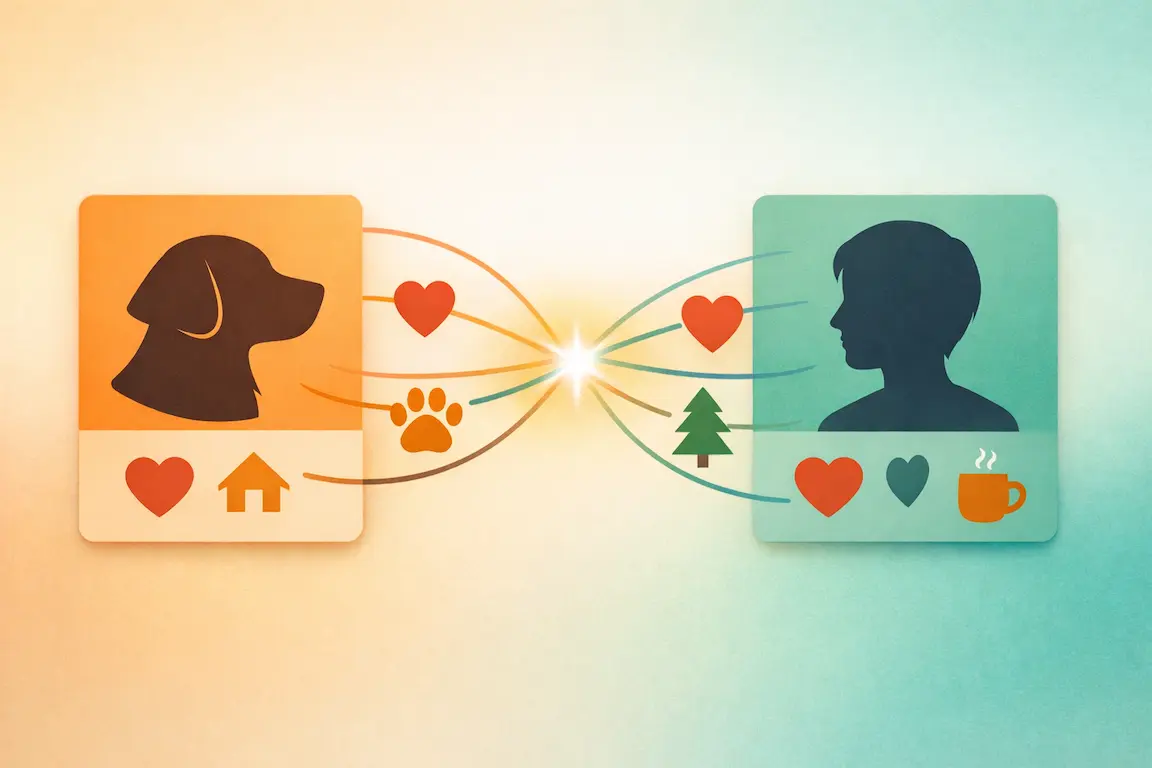
A shared task board where people note what they did and what needs attention prevents a lot of downstream problems. The "what needs attention today" view in PawPlacer exists because we heard this complaint from basically every rescue we talked to early on.
Funding is always tight
This one doesn't go away. But a few things help more than you'd think.
Set up a way to accept donations online with multiple payment methods. Not just at events, not just a Facebook fundraiser, not just checks. A simple donation page with suggested amounts ($25 covers a vaccine, $200 covers a dental) pulls in more than you'd expect from people who want to help but aren't going to mail anyone anything.
Track where the money comes from. If 40% of donations come from follow-up emails to adopters, those emails become a priority. If the annual brewery fundraiser barely breaks even after costs, skip it next year. Most rescues don't track this and then wonder why their revenue feels random.
The logistics eat the mission
Running a rescue is hard in ways that have almost nothing to do with the animals. A lot of it is logistics, records, follow-up, and not letting important things slip through the cracks. The organizations that last are the ones that take the boring operational stuff seriously, because when the operational stuff breaks, the animal stuff breaks too. Usually on a bit of a delay, so you don't catch it until it's already a problem.