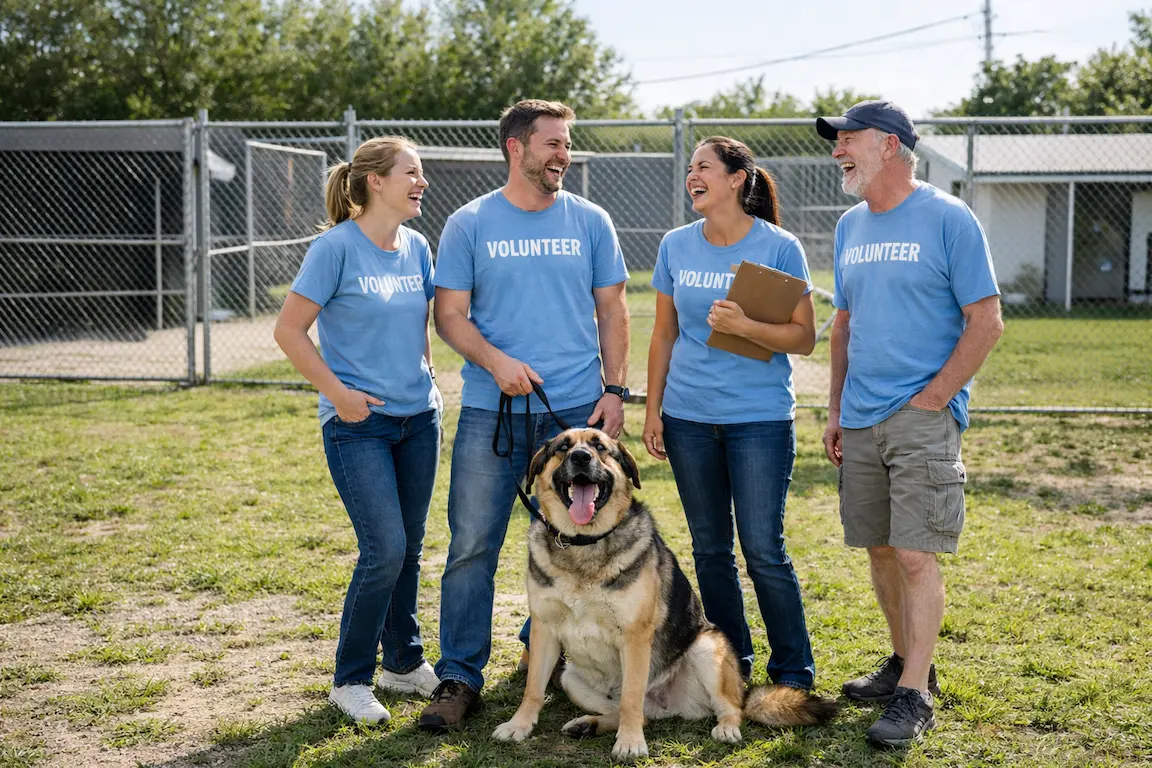
A new volunteer shows up on her first Saturday morning. Nobody's at the meeting point. The door is locked. After ten minutes standing in the parking lot, she drives home. Nobody ever hears from her again. Everyone at the rescue meant to be there. It just slipped through the cracks of a group chat with too many people in it.
That story plays out at a lot of rescues. Most of them can find people willing to try volunteering in the first place. The hard part is turning "tried it once" into "shows up every week," and the answer isn't usually cleverer recruitment. It's keeping the people who already said yes.
People don't know there's a need
This sounds dumb, but it's the most common problem. Social media followers see cute animal photos. The website has an "About Us" page. Nowhere does it clearly say "we need people, here's how to sign up, and here's what you'd actually be doing."
Put a volunteer signup form on the site. Link it from the social media bio. Mention it in posts. When sharing a photo of someone walking dogs, add "want to do this? Link in bio." People need to be told it's an option, specifically and repeatedly.
Be specific about what you need
"We need volunteers!" is vague. Vague asks get vague responses, or none at all.
"We need two people on Saturday mornings to walk dogs from 9-11 AM" is specific. It tells someone exactly what they'd be doing, when, and for how long. People commit to something concrete way faster than to an open-ended "help out whenever."
Same goes for non-animal roles. If someone is needed to run the Instagram, say that. Drive animals to vet appointments, say that. Help at the next adoption event, say that. The person who wouldn't sign up for "general volunteering" might jump at "help us with event photography" because that's something they're actually good at.
The application form matters
Don't skip this. An application form isn't bureaucracy. It's how to figure out where to put people so they're useful and happy.
Ask about availability, what they're interested in doing, relevant experience, physical limitations (important for roles like dog walking), whether they have transportation. If they're under 18, collect guardian info.
Keep it short. Ten to twelve fields, not 30. Anything more can be learned after they start. The form's job is to give enough info to make an initial placement, nothing more. PawPlacer does not automatically change a volunteer form based on age, so use clear optional guardian fields and help text that tells minors what they must complete.
Train them or lose them
A volunteer who shows up on day one and doesn't know what to do won't come back for day two. Training doesn't have to be formal. A 20-minute walkthrough with an experienced volunteer is enough for most roles.
Cover the basics: where things are, what the daily routine looks like, who to ask when they have questions, what the emergency procedures are. Give them a contact person, not a general email. A specific human they can text if they need help. First impressions matter as much for volunteers as they do for anyone else.
Flexible options keep more people
Not everyone can commit to a weekly shift. One-time opportunities (an adoption event, a transport run, a weekend fostering gig) capture people who want to help but can't do a regular schedule.
The most reliable weekly volunteers often come from the pool of people who started with a one-time thing and realized they liked it. Let people ease in.
Actually say thank you
Volunteers don't work for the rescue. They're giving their time because they care about animals, and they can stop at any time. Treat them accordingly.
A text after their shift saying "thanks, the dogs really needed that today" takes 10 seconds and makes someone feel valued. A shout-out on social media when someone hits a milestone costs nothing. A pizza night or end-of-year appreciation event (nothing fancy) goes a long way.
The rescues that keep volunteers around are the ones where people feel like they're part of something instead of just free labor. That comes from being appreciated, kept in the loop, and trusted with meaningful work.
Track what you've got
Once there are more than a handful of volunteers, keeping track of who's doing what becomes its own job. Who's available this Saturday? Did someone complete their training? How many hours has that court-mandated volunteer logged?
PawPlacer handles scheduling, shift logging, hours tracking, and waivers in one place, which is something we were happy to be able to pull together. But whatever system you use, having one beats the alternative. Texting five people to figure out who can cover a shift gets old fast for everyone involved.
The real problem is retention, not recruitment
Most rescues can find people willing to try volunteering. Turning "tried it once" into "shows up every week" is the harder part, and the answer to that is almost never cleverer recruitment tactics. It's better onboarding, better clearer updates, better appreciation, and systems that make volunteering feel organized instead of chaotic.
When people enjoy their time with a rescue, they stay. When they feel confused, undervalued, or like nobody noticed whether they showed up, they leave. Fix the experience and most of the retention problem sorts itself out.