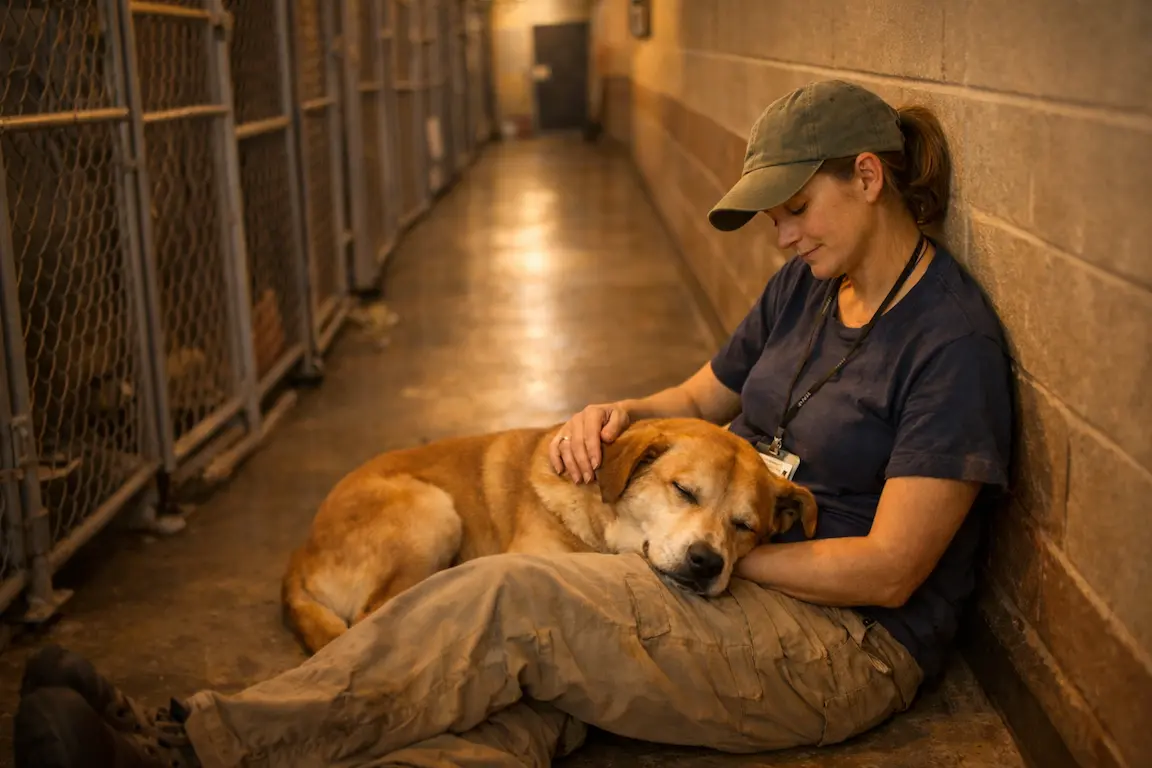
Nobody warns you about the nightmares. Or the guilt that follows you home after a euthanasia decision. Or the way a sad intake photo can ruin your entire Tuesday. If you work in animal rescue, you already know what compassion fatigue feels like, even if you've never had a name for it.
It's the emotional and physical exhaustion that comes from caring about animals in crisis, day after day, with no end in sight. Having it doesn't mean you're weak, and it doesn't mean you're bad at your job. It means the job is hard and the system is broken in ways no individual can fix.
A lot of people in rescue don't talk about this. There's a culture of toughness, of pushing through, of "the animals need me so I can't stop." But pretending burnout doesn't exist is how good people flame out and good organizations fall apart.
How it shows up
It's not always dramatic. Sometimes it's subtle: you stop reading the intake emails. You snap at a volunteer over something small. You feel numb during situations that used to make you cry. You dread going to the shelter on Monday morning even though you love the animals. Difficulty sleeping, irritability, withdrawing from people, headaches, the feeling that nothing you do matters. If any of that sounds familiar, you're not alone and you're not broken.
Why rescue is especially rough
Animal rescue puts you in an impossible position. You care deeply about every animal, but resources are finite. You can't save them all and you know it. That gap between what you want to do and what you can do is where compassion fatigue lives.
Add in long hours, low (or no) pay, emotionally charged interactions with the public, and the constant stream of animals in need. It's surprising anyone lasts more than a couple of years in this work. The people who do are usually the ones who've figured out how to take care of themselves while taking care of animals.
Things that actually help (not pizza parties)
Set boundaries around after-hours requests. Not everything is an emergency. If your team is fielding texts at 11 PM about non-urgent stuff, that's a culture problem, not a dedication problem. Define what a real emergency looks like, build an escalation path, and let everything else wait until morning.
Rotate the hard stuff too. Don't let the same person handle every euthanasia, every cruelty case, every aggressive intake. Spread the emotional weight around. If someone's consistently getting the worst tasks, check in with them. Not to praise how tough they are, but to ask whether they need a break.
Make it safe to not be okay. There's an unspoken thing in rescue where crying after a euthanasia means you're too soft. That's garbage. The person who says "I'm having a really hard time" is braver than the person pretending they're fine. Make sure people know the door's open.
And actually take your days off. Don't check the shelter email, don't scroll intake photos, don't answer "just one quick question." Your days off exist because you need them. When you're ready to talk, try to find someone who gets it: a therapist, another rescue worker, an online community. Well-meaning friends who say "just don't think about it" are not the audience for this conversation.
A few smaller things help too. Set limits on the social media scroll; the endless feed of animals in need is its own form of secondary trauma, and it's okay to mute groups or unfollow pages without guilt. Go for a walk after a bad day. Twenty minutes around the block isn't a fix, but it shakes off some of the heaviness.
The admin grind is part of it too
Something people don't talk about enough: a huge chunk of rescue burnout isn't even the emotional stuff. It's the paperwork. Tracking medical records on paper, wrangling fosters through a maze of spreadsheets, fielding adoption inquiries from your personal email at 10 PM.
Getting organized won't cure compassion fatigue, but it does take one of the things off the pile. When your pet records, foster info, and task list all live in one place instead of seven, you claw back time and mental space for the parts of rescue that actually matter.
The reason you're burning out is the same reason you got into this in the first place: you care about these animals more than is probably reasonable. That's a gift. But it'll eat you alive if you don't protect it.
Take your breaks. Talk to people. Let yourself be bad at disconnecting and then try again tomorrow. The animals need you around for the long haul, not just the next six months.